
iptv mental health content plan
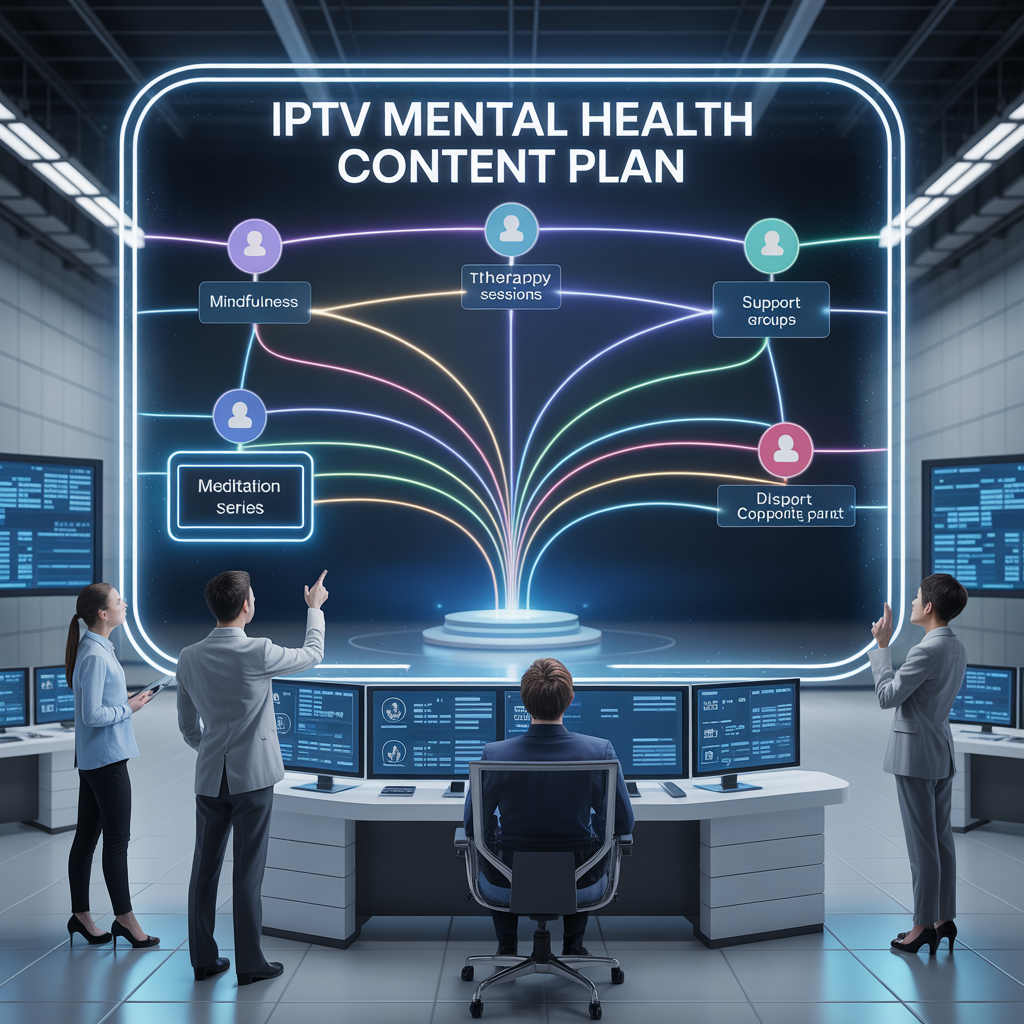
IPTV Mental Health Content Plan – A Comprehensive Guide to Building a Supportive Streaming Experience
Practical steps and thinking to design a streaming lineup that supports mental well-being, reduces stress, and encourages healthier viewing habits.
Introduction: When Streaming Becomes More Than Entertainment
For most people, IPTV (Internet Protocol Television) is all about entertainment — movies, sports, live shows, and endless binge-worthy series. But in the last few years, an interesting shift has been happening. People are turning to IPTV not just to pass the time but to improve their mental well-being.
Think about it: streaming services already shape what we watch, how we spend our evenings, and even how we feel afterward. So why not intentionally use IPTV to create a mental health content plan that helps reduce stress, improves mood, and fosters positive habits?
In this guide, we’ll walk through how to design an IPTV mental health content plan that works for individuals, families, or even entire communities. We’ll explore content types, scheduling strategies, psychology-backed viewing habits, and the role IPTV can play in building a healthier mind.
Understanding the Link Between IPTV and Mental Health
A practical, human-first look at how what we stream shapes how we feel — and what to do about it.
Why this matters
We live in an age where television follows us everywhere. IPTV — streaming delivered over the internet — has made it simple to pick a mood and press play. That convenience is great, but it also matters because the shows, channels, and playlists we choose influence our emotional life more than most of us realize.
This piece isn’t about scare tactics. It’s about understanding the connection between what you stream and how you feel, and then using that awareness to build healthier, more intentional viewing habits.
Emotional contagion: you catch feelings from screens
Humans are wired to mirror emotion. On the couch, that instinct doesn’t stop — it just targets a TV screen. Watching someone laugh, panic, or cry can shift your own mood in the same direction, sometimes subtly and sometimes immediately.
That’s why a night of dramas heavy on fear or conflict can leave you feeling tense, while a short documentary about people helping one another can lift your spirits. Not all content affects everyone the same way, but emotional contagion is a reliable, predictable part of the viewing experience.
Neurochemistry in a box: dopamine, stress, and reward
Streaming platforms are designed to make watching easy — and satisfying. That convenience, combined with cliffhangers and short-form rewards, nudges the brain’s reward centers. Dopamine spikes when we get emotional highs, comedic payoffs, or satisfying conclusions.
That’s useful: dopamine helps us learn and feel pleasure. But it also explains why endless episodes can become a loop — and why mood swings may follow a long binge. Conversely, calm, slow-paced content can support more stable feelings and lower stress hormones in the short term.
Sleep, circadian rhythm, and late-night streaming
Late-night IPTV sessions are a cultural staple. The trouble is they can interfere with sleep. Bright screens, exciting plots, and emotional arousal all work against the body’s wind-down process. Even “just one more episode” can stretch bedtime and fragment sleep, which then affects mood, concentration, and resilience the next day.
Simple sleep-friendly rule: try a 60-minute buffer between screen time and sleep — swap to a calming playlist, audiobook, or quiet routine instead.Binge-watching: when coping becomes avoidance
People often turn to streaming to escape. That’s normal and sometimes helpful: a short comic break can clear the mind. Problems arise when streaming replaces facing stressors, avoiding social contact, or becomes the primary tool for mood regulation.
If you find watching has moved from “fun” to “automatic refuge,” it’s worth examining its role. Ask when and why you open the app, and whether the content leaves you refreshed, numb, or worse.
Content matters — not just quantity
It’s tempting to think “more moderation” is the only fix. Quantity matters, but content does too. Certain genres consistently produce different emotional outcomes:
- High-conflict reality TV / violent drama: can increase arousal and tension.
- Nature and slow documentaries: tend to calm and reduce perceived stress.
- Educational or skills videos: can boost self-efficacy and mood through learning.
- Comedy and feel-good shows: often provide quick mood improvements without the long tail of rumination.
Choosing content intentionally — not just whatever autoplay suggests — gives you leverage over your emotional landscape.
Personalization: use your IPTV to support your mind
The flexibility of IPTV is its secret power here. Create playlists for different needs: a 15-minute “focus” playlist for work breaks, a “wind-down” list for evenings, or a family-friendly queue for shared dinners. Even small edits — swapping a cliffhanger serial for a short documentary at night — can shift how you sleep and feel.
Vulnerable viewers: extra care for some groups
Not everyone is affected equally. People with anxiety, depression, PTSD, or disrupted sleep can be more sensitive to content. If you’re supporting someone in that position, collaborate on viewing choices and check in on how different types of media affect them.
Families can benefit from shared norms: quiet time before bed, news limits, and mixed content that includes light, connective programming.
Practical steps to healthier IPTV habits
Here are actionable steps you can try this week — no gimmicks, just practical moves.
- Audit one week: note what you watch and how you feel before and after.
- Create themed playlists: “Morning energizers,” “Evening calm,” “Learning breaks.”
- Set a wind-down rule: end emotionally intense content at least an hour before bed.
- Limit news loops: schedule a short, fixed news check instead of continuous watching.
- Use streaming features: bookmarks, watch-lists, and parental controls can block triggers or automate calming content.
When to seek help
If viewing habits are part of a larger pattern — decreased interest in other activities, persistent low mood, or sleeping problems that don’t respond to simple changes — consider talking to a mental health professional. Media habits matter, but they are one piece of a bigger picture.
Final thoughts
IPTV is a tool. Like any tool, it can be used to build or to break. The difference between passive scrolling and purposeful viewing is small but powerful. With a few intentional adjustments — chosen content, simple schedules, and mindful limits — streaming can become a reliable ally in everyday mental health rather than an invisible saboteur.
Start small. Try one playlist change this week and notice the result. That tiny experiment can teach you what works for your life.
The Goals of an IPTV Mental Health Content Plan
Practical aims, real examples, and simple ways to know whether your streaming choices are actually helping.
Why set goals at all?
When people say “let’s make a mental health plan,” they often picture therapists, long forms, and therapy schedules. But an IPTV mental health content plan is different — it’s smaller, quieter, and immediately useful. Goals give that quiet intention shape. They turn passive scrolling into a set of deliberate choices that support sleep, reduce stress, and build healthier daily routines.
Below are the most useful, practical goals you can set when curating IPTV content for mental well-being, with concrete examples and measurement ideas so you can tell if it’s working.
1. Reduce immediate stress and physiological arousal
One of the simplest aims is to lower short-term stress. That’s what calming shows, nature streams, and slow documentaries do best. The idea is to offer content that helps viewers come down from a high-arousal state.
Example: A 20–30 minute “Evening Calm” playlist made of slow-paced nature clips and guided breathing practices for people to watch after work. How to measure: self-reported stress on a 1–10 scale before and after viewing; reductions in heart rate if wearable data is available.2. Improve mood and boost positive affect
Not all content needs to be quiet to be restorative. Uplifting stories, light comedies, and human-interest pieces can increase joy and hope. This goal is about intentionally including content that reliably lifts spirits.
Example: A weekly “Feel-Good Friday” feature — short documentaries or interviews that highlight kindness, resilience, or humorous human moments. How to measure: mood check-ins using simple tags (e.g., “mood up / same / down”) after viewing sessions over a month.3. Teach practical skills and encourage self-efficacy
Education is therapy-adjacent. Short guides on breathing, sleep hygiene, problem-solving, and interpersonal communication empower people to act. The goal is to offer content that viewers can use in daily life.
Example: A menu of 5–10 minute “Skill Bites” teaching a single technique (box breathing, progressive muscle relaxation, a sleep ritual). How to measure: follow-up surveys asking which techniques were tried and how helpful they were (Likert scale).4. Strengthen social connection and reduce isolation
Watching together changes the experience. Shared viewing can spark conversation, normalize emotions, and create rituals. This goal emphasizes content that invites discussion or shared reflection.
Example: Curated short films with discussion prompts for a family night or a community group watch. How to measure: count attendance at shared viewing events; collect brief feedback on whether conversations increased after sessions.5. Protect sleep and circadian health
Screen time is a major factor in sleep disruption. A content plan should include a “wind-down” track: low-stimulus, non-violent, low-brightness-friendly programming intended for the hour before bed.
Example: “Night Mode” playlist — ambient soundscapes, narrated sleep stories, and short meditations designed for bedtime. How to measure: self-reported sleep latency and quality; changes in the number of nightly wake-ups; or a simple sleep diary.6. Reduce exposure to triggering or harmful material
Part of a responsible plan is deciding what to exclude. That might mean blocking violent content, limiting sensational news, or filtering material that triggers anxiety or past trauma.
Example: Using IPTV parental controls or curated channel sets to remove high-conflict reality TV during recovery periods. How to measure: track instances where viewers report feeling triggered and correlate them with recent content watched.7. Build healthy media habits and routines
Goals should help habits form. Think of playlists, scheduled “watch windows,” and consistent cues: a 15-minute guided meditation every morning, or a shared documentary every Sunday. Routines make positive outcomes predictable.
Example: A “21-day calm challenge” playlist that nudges viewers toward a daily 10-minute practice for three weeks. How to measure: completion rates for the challenge and self-reported habit strength after 21 days.8. Promote accessibility, inclusivity, and cultural relevance
Good mental health content should be accessible (captions, translations), culturally sensitive, and representative. The goal is to make sure everyone who needs the content can use it comfortably.
Example: Multiple language options, captioned guided meditations, and content that reflects diverse family structures. How to measure: usage statistics by language or feature (captions on/off) and qualitative feedback from diverse user groups.9. Measure impact and iterate
Finally, a plan is only useful if you know whether it’s working. Decide on a small set of realistic metrics (mood, sleep quality, habit formation, event attendance) and revisit them every month. Keep the feedback loop short: tweak playlists or schedule times based on real responses, not assumptions.
- Pick 2–3 metrics that are easy to collect.
- Run a 4-week pilot with a small group.
- Collect quantitative + qualitative feedback.
- Adjust and scale.
Putting it together: a simple starter checklist
- Create at least three playlists: Morning Boost, Work/Focus Breaks, Evening Wind-Down.
- Block or limit one content category that tends to be harmful (e.g., late-night news).
- Run a one-month experiment and collect two quick metrics (mood before/after, sleep quality).
- Hold one shared viewing session each week to foster connection.
Closing note
Goals turn good intentions into measurable action. An IPTV mental health content plan doesn’t promise miracles — but it does offer low-effort, high-impact ways to make everyday life a little calmer, more connected, and a touch more resilient. Start small, measure simply, and let what you learn shape what you watch next.
Building the Right Content Categories
A practical, human-centered guide to organizing IPTV content so your streaming lineup actively supports mental well-being.
Why categories matter
When people talk about “curating content,” they usually mean picking good shows. For a mental health–focused IPTV plan, curation means something slightly different: grouping material by its emotional purpose. Good categories make choices predictable, reduce decision fatigue, and make it possible to reach for exactly what you need — calm, a laugh, a skill, or a conversation starter — without wasting time or energy.
Core categories to include
Below are the practical categories I recommend. Each has a clear goal, sample content types, and ideas for how to use it in everyday life.
1. Calming & Low-Arousal
Purpose: lower heart rate, ease anxiety, support sleep readiness.
- Content: slow nature documentaries, ambient visuals (rain, ocean), long-form scenic loops, ambient music channels.
- When to use: evening wind-down, short midday decompression, waiting rooms.
- Tip: favor long takes and minimal narration to avoid cognitive stimulation.
2. Uplifting & Positive Stories
Purpose: boost mood, increase hope and resilience.
- Content: human-interest shorts, feel-good documentaries, lighthearted interviews, short uplifting narratives.
- When to use: morning pick-me-ups, social evenings, “boost breaks.”
- Tip: include diverse stories to help viewers find relatable role models.
3. Guided Practices
Purpose: teach and scaffold practical mental health skills.
- Content: guided meditations, breathing exercises, progressive muscle relaxation, short yoga/stretch sessions.
- When to use: morning routines, pre-sleep, during breaks for regulated emotion.
- Tip: tag by length (3, 10, 20 minutes) so viewers can pick what fits their schedule.
4. Education & Psychoeducation
Purpose: increase understanding of mental health, reduce stigma, provide tools.
- Content: expert interviews, explainers on anxiety/depression, short courses on resilience, practical how-tos.
- When to use: learning evenings, workplace wellbeing programs, community screenings.
- Tip: present actionable takeaways — not just theory.
5. Light Entertainment
Purpose: provide gentle distraction, laughter, and social glue.
- Content: family-friendly sitcoms, clean stand-up clips, feel-good animations.
- When to use: family nights, social gatherings, short breaks.
- Tip: steer clear of content heavy on conflict or sarcasm if the goal is restoration.
6. Interactive & Community Content
Purpose: foster connection and conversation.
- Content: watch-along events with discussion prompts, community panels, live Q&A with experts.
- When to use: weekly group sessions, workplace wellbeing slots, neighborhood meetups.
- Tip: include simple post-viewing prompts to start a conversation (3 questions max).
7. Practical Life Skills
Purpose: improve day-to-day functioning and self-efficacy.
- Content: sleep hygiene tips, stress management how-tos, time management micro-lessons.
- When to use: educational series, workplace training, as part of guided practice sequences.
Metadata and micro-tags that make categories usable
Categories alone aren’t enough. Add micro-tags so users can filter quickly:
- Duration: 3–5 min, 10–20 min, 30+ min.
- Intensity: low, medium, high (emotional/visual intensity).
- Purpose tag: sleep, focus, energize, learn, connect.
- Accessibility: captions, audio description, language options.
These tags turn a category list into a living toolbox. Want to sleep? Filter for “Calming + <10 min + captions.”
Personalization and adaptive playlists
Not everyone experiences categories the same way. Good systems let people mark content as “soothing for me” or “not for me.” Over time, the platform learns that certain nature scenes relax you while another viewer prefers short comedies.
Practical move: create a “My Calm” playlist and invite users to add or remove items. Small personalization beats broad assumptions.Sourcing and curation: quality over quantity
Curate from trusted creators — educators, clinicians, filmmakers with sensitivity to trauma. Don’t just pull everything tagged “wellness.” Sample content first, watch it end-to-end, and check for unexpected triggers (graphic descriptions, harsh language).
Where possible, include short descriptions that explain why the piece belongs in the category (e.g., “gentle 12-minute ocean loop — designed for breathing practice”).
Sample starter lineup (quick reference)
- Calming: 60-minute morning nature loop, 15-minute guided breathing.
- Uplifting: 10-minute human-interest shorts, weekly feel-good documentary.
- Guided Practices: 3-minute box breathing, 20-minute restorative yoga.
- Education: 5-part series on sleep hygiene (each 12 minutes).
- Interactive: Monthly live Q&A with a mental health practitioner.
Measurement and iteration
Finally, test and iterate. Pick a couple of simple metrics — mood before/after, playlist completion rates, or attendance at group events. Use that data to move content between categories (or out of the platform entirely).
Example: a “Calming” playlist that consistently shows low completion may be too long or too boring; try shorter pieces or swap in a different narrator.Closing thoughts
Categories are a promise: a promise that when someone hits “Calming” they’ll get content that does a particular job. Build that trust by being intentional about purpose, careful about sourcing, and flexible with personalization. With clear categories and smart tagging, IPTV becomes less like an infinite scroll and more like a tiny, reliable mental health toolkit.
Scheduling for Mental Well-Being
How to arrange your IPTV viewing so it supports sleep, focus, mood, and connection — practical rules, examples, and a few things to try this week.
Start with the problem, not the playlist
Most scheduling advice begins with “watch this” or “create that playlist.” That’s backward. A good schedule starts with the outcome you want: better sleep, less reactive evenings, more focused breaks, or stronger family time. Once you choose the outcome, you can pick the right content and timing to support it.
Basic principles to guide scheduling
- Purpose over habit: Ask “What do I want to feel after watching?” — calm, energized, informed, connected — and schedule accordingly.
- Timebox viewing: Give shows a start and stop time. Decisions are easier when limits are built into the routine.
- Wind-down buffer: Build at least 45–60 minutes of low-stimulus activities (no intense drama, no breaking-news loops) before bedtime.
- Match intensity to time of day: Reserve high-arousal content for daytime; save calm, restorative material for evenings.
- Make room for non-screen practices: Use IPTV to cue other healthy behaviors (stretching, journaling, a short walk).
Sample daily schedule (flexible)
Morning (15–30 min) — Short, uplifting content or a 10-minute guided breathing session to set an intentional tone.Midday (10–20 min) — A focused “work-break” playlist: instrumental music, short how-to videos, or a quick comedy clip to reset energy.
Late afternoon (optional, 10–30 min) — A brief guided movement or stretch video to break sedentary time.
Evening (60+ min) — Shared dinner-friendly content or a single episode of light entertainment.
Pre-sleep buffer (45–60 min) — Calming nature loops, narrated sleep stories, or a guided meditation. No violent or highly suspenseful material.
Adjust times to your schedule. The important bit is consistency and the deliberate switch to lower-arousal content as the day ends.
Weekly structure ideas
Daily routines are great, but variety keeps the plan from feeling rigid. Try mixing in weekly themes:
- Mindful Monday: short breathwork or intention-setting content.
- Teach-it Tuesday: a 10–15 minute practical skills clip.
- Feel-Good Friday: uplifting stories or comedy to kick off the weekend.
- Sunday Reflection: a documentary followed by a short journaling prompt for the week ahead.
Family and workplace adaptations
Schedules should fit the people using them. For families, include a shared “watch-and-talk” night where content is short and discussion-focused. For workplaces, create a “calm room” stream or a lunchtime playlist for 15-minute restorative breaks.
Practical tip: announce a short, consistent ritual — like “10-minute break at 2:00 PM” — so watching becomes a social cue for stepping away from work rather than an excuse to escape it.Rules that actually work (not preachy, just useful)
- One-episode rule: decide in advance whether you allow “one more” or a fixed number of episodes.
- Wind-down swap: if you usually watch intense shows before bed, replace the last 30–60 minutes with something calming for two weeks and note the change.
- News window: limit news to a single short check (for example, 15 minutes after breakfast) instead of grazing the whole day.
- Playlist-first: create a short, named playlist for each part of the day and use it — playlists reduce decision fatigue.
Short experiments to try this week
Small tests are how real change sticks. Try one of these 7-day experiments and note what changes.
- Sleep buffer trial: No screen-based drama within 60 minutes of bed for 7 nights.
- Morning reset: Start each day with 10 minutes of uplifting or skill-building content for a week.
- Shared Sunday: Schedule one short documentary with a partner or friend and discuss it for 10 minutes afterward.
How to measure success
Keep measurement light and human: a two-question daily check-in works well.
- How did you feel after your main viewing session? (Better / Same / Worse)
- How many nights this week did you sleep through the night? (Number)
Review after a week and tweak. If something consistently makes you feel worse, move it or remove it — schedules are meant to be useful, not rigid.
Final thought: scheduling as an act of self-care
Scheduling isn’t about restriction for its own sake. It’s a simple way to make sure the media you consume works for you instead of against you. Think of it as designing small rituals that nudge your day toward rest, focus, and connection. Try one small change this week and see how it feels — that tiny experiment is the beginning of a healthier relationship with what you watch.
Avoiding Harmful Viewing Patterns
How to spot when your streaming habits are doing more harm than good — and simple, realistic steps to take back control.
What “harmful viewing” looks like
“Harmful” doesn’t always mean watching a single bad show. It’s a pattern: watching to avoid, watching until you’re exhausted, or letting the screen disrupt your life. Common examples include late-night binge loops, doomscrolling through news and commentary, repeated re-watching to numb out, and using IPTV as the default response to every emotion.
This article isn’t about shaming screens — it’s about helping you notice patterns and change them with small, useful moves.
Why habits slip into harmful territory
Streaming services are designed to keep you watching: autoplay, endless catalogs, and short reward cycles make it easy to fall into loops. Add stress, loneliness, or fatigue, and suddenly the remote becomes a coping tool. That’s understandable — but when watching starts to replace sleep, meaningful relationships, or important tasks, the habit has outlived its usefulness.
Quick checklist: are your viewing habits harmful?
- Do you frequently watch to avoid dealing with feelings or tasks?
- Do you feel groggy or regretful after long sessions?
- Is your sleep suffering because of late-night viewing?
- Have friends or family mentioned you’re “always watching”?
- Do you find the app opens automatically when you’re bored, anxious, or lonely?
If you answered “yes” to one or more, try a small experiment below.
Small experiments that actually work
Change happens through tiny tests, not dramatic willpower. Try one experiment for 7 days and keep it simple.
- The 1-Episode Rule: Decide you’ll watch only one episode (or one movie) in a sitting. Put your phone in another room before the episode ends.
- 60-Minute Wind-Down: No intense or emotional content within 60 minutes of bedtime. Replace with music, a short meditation, or a nature loop.
- News Window: Limit news to one 15-minute slot each day instead of checking feeds intermittently.
- Swap-and-Do: When you feel the urge to use TV to avoid a task, swap the screen for a 10-minute active break — a walk, tidy a small area, or call someone.
Rules that reduce decision fatigue
Decision-making gets hard when you’re tired. Pre-committing to simple rules frees up willpower.
- Create playlists: A “Wind-Down” and a “Short Boost” playlist remove the need to choose under stress.
- Block autoplay: Turn off autoplay to prevent endless episodes.
- Set a physical boundary: no screens in the bedroom, or a specific shelf for the remote.
- Use timers: Set a 45 or 60-minute timer that reminds you to stop watching.
Dealing with emotional triggers
Some content triggers strong emotions — grief, panic, or flashbacks for people with trauma. If you notice a show leaves you shaken, it’s worth removing similar material from your regular rotation. For vulnerable viewers, a short pre-screening and clear content notes (e.g., “contains intense scenes”) make a big difference.
Practical step: Build a small “avoid” list and use parental controls or custom channel sets to filter triggers.Social fixes — because isolation fuels bad patterns
If you’re using streaming to fill social gaps, invite others to watch with you. Shared viewing — even a 20-minute short followed by a chat — turns passive consumption into connection. Schedule a weekly “watch-and-talk” with a friend or family member and treat it like a social appointment.
When it’s more than a habit
Sometimes viewing is a symptom, not the problem. If you notice prolonged low mood, withdrawal from activities you once enjoyed, severe sleep disruption, or difficulty managing daily tasks, consider reaching out to a mental health professional. Streaming patterns can improve, but they may also be a sign that deeper support is needed.
Longer-term strategies to stay balanced
- Designate screen-free times: meals, first hour after waking, and the last hour before bed.
- Replace, don’t just remove: if you cut TV time, fill it with a meaningful activity — reading, walking, a hobby.
- Track gently: note how you feel after viewing for two weeks. Use that data to refine playlists.
- Mix content: alternate restorative content with light entertainment rather than chaining intense shows back-to-back.
Final note: kindness beats punishment
Breaking a pattern is awkward and imperfect. Expect slips. The goal is progress, not perfection. Celebrate small wins — one calmer week, better sleep, or a shared evening with a friend. Those tiny changes compound into a much healthier relationship with what you watch.
Leveraging IPTV Features for Mental Health
A practical, human-centered look at how platform features — playlists, profiles, captions, schedules and more — can make streaming a tool for emotional well-being, not a liability.
Why platform features matter
Most advice about healthy streaming focuses on “what” to watch. That’s important, but the “how” matters just as much. IPTV platforms come with a toolbox of features that — when used intentionally — can reduce stress, protect sleep, and make media use more mindful. The trick is to stop treating these features as convenience add-ons and start using them as deliberate design choices for mental health.
Playlists: your mental-health playlists are underrated
Playlists are the easiest win. Instead of scrolling, curate short playlists that match emotional needs.
Practical playlists to create
- Morning Boost (10–20 min): short uplifting clips, gentle guided movement, or a motivational micro-lecture to start the day intentionally.
- Work Breaks (5–15 min): instrumental focus music, micro-meditations, or quick stretching guides.
- Evening Wind-Down (30–60 min): nature loops, narrated sleep stories, or slow-documentary segments.
Profiles & personalization: one size rarely fits all
Create profiles for different moods and people. Personalization reduces friction and avoids the “what should I watch?” trap that leads to overuse.
How to use profiles effectively
- Personal Mood Profiles: “Calm Me,” “Learn,” “Laugh” — each with its own curated queue.
- Family Profiles: child-friendly defaults and an adult profile with “night mode” restrictions.
- Temporary Profiles: for guests or short-term needs (e.g., a grief-support profile while someone is processing loss).
Parental & content controls: more than child safety
Think of content controls as a way to filter harmful material for anyone sensitive to it, not just kids. Use them to block high-conflict reality TV, graphic scenes, or late-night news during recovery periods.
Example: enable a “low-arousal” mode that hides explicitly violent or high-drama titles from night-time profiles.Scheduling & reminders: treat screens like appointments
Many IPTV apps let you schedule recordings, reminders, or timed play. Use schedules to create media rituals: a 15-minute mid-afternoon reset, or an automatic switch to “night mode” at 9:00 PM.
- Set recurring reminders that cue offline practices after viewing (e.g., “After this episode, do a 10-minute stretch”).
- Use timers to enforce limits — an automated stop can be kinder than relying on willpower.
Captions, audio description & accessibility: inclusion supports calm
Accessibility features are mental-health features. Captions reduce the cognitive load of following dialogue and help those who process auditory input differently. Audio description makes visual storytelling accessible to people with limited vision and can reduce anxiety about missing key plot points.
Practical move: enable captions by default on your “Wind-Down” profile to reduce the effort of tracking fast dialogue at night.Autoplay, recommendations & algorithmic nudges
Recommendation engines are persuasive — and not always in your best interest. Turn off autoplay where possible and be mindful of algorithmic suggestions that push high-arousal content. Instead, train the recommender: like or save calming titles and mark triggers as “not interested.”
If your recommendations keep surfacing sensational news, spend five minutes “training” the algorithm so it shows more soothing content over time.Multi-device sync and pick-up-where-you-left-off
Multi-device syncing is useful for continuity, but it can also perpetuate late-night viewing (finish a show on the phone in bed because you “left it on the TV”). Use device-aware rules: enable “bedtime” mode on mobile that limits autoplay or prompts a wind-down playlist before resuming.
Offline downloads and low-stress viewing
Downloads are helpful for travel and for predictable offline routines. Pre-download your calm playlists for evenings, airplane trips, or times when network stress would add to anxiety. Knowing you have a tested, offline playlist removes decision friction in low-energy moments.
Integrations: wearables, smart lights, and voice assistants
Many modern IPTV setups can talk to the rest of your smart home — and that’s powerful for mental health.
- Wearable integration: tie a meditation video to a wearable prompt — when your heart rate spikes, your watch suggests a 3-minute breathing video queued on the TV.
- Smart lights: automatically dim lights when “Wind-Down” playlist starts to cue circadian-friendly behavior.
- Voice assistants: use a single command to start a “sleep” playlist or to mark content as “too intense.”
Built-in analytics and gentle measurement
Use viewing stats wisely. Look for patterns: which playlists finish, what time people stop watching, and which titles correlate with poor sleep reports. Keep metrics simple: mood before/after, playlist completion, and sleep quality. Use the data to refine playlists — not to shame users.
Privacy, consent & ethical design
When you start to personalize and integrate, respect privacy. Be transparent about data use, and build opt-in choices for health integrations (wearables, sleep-tracking). For family profiles, be clear about what’s shared and what stays private.
Quick implementation checklist
- Create three playlists: Morning Boost, Work Breaks, Evening Wind-Down.
- Set up profile-specific defaults (captions on, autoplay off for night profiles).
- Schedule a nightly “night mode” that swaps to low-arousal content automatically.
- Train recommendations by liking peaceful content and marking triggers “not interested.”
- Test a smart-home automation: dim lights + start Wind-Down playlist at a chosen time.
Real-world examples (short)
Family living room: a “Family Night” profile with kid-friendly playlists and a 9:00 PM auto-switch to “Adult Wind-Down” on the main profile.
Small workplace: a lunch break channel with 10-minute guided stretches and soft focus music, scheduled at 1:00 PM daily.
Closing thought
IPTV platforms give you control — use it. The difference between passive consumption and intentional design often comes down to two things: a few thoughtful playlists and a couple of simple automations. Start small, measure lightly, and iterate. Before long, your streaming habits will serve you rather than run you.
Mental Health Content for Different Audiences
How to design IPTV mental health programming that actually fits the people you want to help — short, practical, and written the way a colleague would explain it over coffee.
Start from who, not what
It’s easy to build a “wellness channel” and call it a day. The better move is to ask: who will watch this, when, and why? Different audiences have different needs, attention spans, cultural references, and access requirements. The suggestions below are practical, low-friction ideas you can implement quickly.
1. Individuals (self-guided viewers)
Keep it simple and actionable. Solo viewers often want short, immediately useful content they can fit into a day.
- Formats: 3–10 minute guided meditations, quick breathing exercises, short mood-boosting clips, single-topic explainers.
- Design tips: label by duration and purpose (e.g., “3-min calm” or “10-min focus”). Offer a one-click “Do this now” option.
- Example: a “Pocket Calm” playlist of 3, 5, and 10-minute options for stressed moments.
2. Families
Family viewing should create connection without overstimulating. Think conversation starters and shared rituals.
- Formats: short family-friendly documentaries, guided breathing for kids, joint movement sessions, and discussion prompts.
- Design tips: keep pieces under 20 minutes, include parental notes, and alternate fun with reflective segments.
- Example: “Family Night” block: a 12-minute nature short + two discussion questions to talk about at dinner.
3. Workplaces & teams
At work the goal is quick restoration and team cohesion, not therapy. Lightweight, repeatable resources work best.
- Formats: 5–10 minute micro-break videos, guided stretches, short mindfulness moments, lunchtime skill-builders (time management, resilience).
- Design tips: integrate into calendars, keep corporate language neutral, and make sessions optional and confidential.
- Example: a daily “2:30 PM Reset” channel with a 7-minute guided breathing and stretch routine.
4. Youth and teens
Young people respond to authenticity, brevity, and interactivity. They also need clear safety nets and guidance.
- Formats: short teen-led stories, animated explainers, interactive Q&A sessions with professionals, creative prompts (draw, write, short challenges).
- Design tips: keep visual pacing lively, include clear signposting for help resources, and allow anonymity for feedback or questions.
- Example: a “5-minute real talk” series with youth sharing coping strategies followed by a one-question poll.
5. Older adults
Older viewers often prefer calmer pacing, larger text, and content that honors life experience.
- Formats: narrated reminiscence prompts, gentle movement, sleep-friendly storytelling, accessible psychoeducation on aging and loneliness.
- Design tips: enable captions and audio description by default, use simple navigation, and avoid fast cuts.
- Example: weekly “Remind & Reflect” program — 15 minutes of gentle prompts and music suitable for shared viewing in community centers.
6. Neurodivergent audiences
People with ADHD, autism, sensory sensitivities, or other neurodivergent profiles need choice and predictability.
- Formats: low-sensory options (calm visuals, minimal narration), structured routines, visual schedules, and short skill-based modules.
- Design tips: allow toggles for sensory intensity, provide clear content descriptions, and offer visual timers for transitions.
- Example: a “Low Stim” playlist with 10–20 minute nature loops and optional soft narration.
7. Caregivers
Caregivers need quick replenishment and practical tools — time is scarce and stress is high.
- Formats: 5–10 minute recovery breaks, guided micro-practices, short tips on setting boundaries and managing guilt.
- Design tips: make content available on demand, include micro-actions they can do in five minutes, and provide peer stories for normalizing experience.
- Example: “Caregiver Five” — five different 5-minute breaks to rotate through when overwhelmed.
8. Multicultural and multilingual audiences
Cultural relevance and language access are non-negotiable for impact.
- Formats: translated captions, culturally tailored stories, and regionally relevant examples.
- Design tips: consult community representatives, offer multiple language tracks, and avoid one-size-fits-all metaphors.
- Example: the same guided meditation recorded in multiple languages with culturally resonant imagery for each audience.
Measuring what matters
Keep evaluation light. Two simple metrics often tell you more than a long survey:
- Self-reported feeling: better / same / worse after watching.
- Engagement: playlist completion or rewatch rates for targeted content.
Combine metrics with short qualitative feedback — a single open question — and iterate quickly.
Final notes — empathy and iteration
The real secret is listening. Launch small, collect quick feedback, and adapt. What calms one group may irritate another; what helps today may need tweaking next month. Keep the bar low for participation and high for empathy. If you do that, your IPTV mental health content will feel less like a polished product and more like a helpful neighbor.
Combining IPTV with Offline Practices for Better Mental Health
How to use IPTV content not as a substitute for life but as a complement — pairing streaming with reflection, movement, and mindful breaks to enhance mental well-being.
Why offline integration matters
Streaming is powerful, but it can become passive if left unbalanced. Offline practices transform what you watch into action, reflection, and habit formation. By combining IPTV mental health content with real-world activities, you create a cycle of learning and reinforcement that strengthens emotional resilience.
Even short, intentional offline moments — 2–5 minutes — can make content stick and reduce cognitive fatigue.Reflection exercises
After watching a video on coping strategies or mindfulness, take a few minutes to reflect offline. Simple prompts help consolidate learning:
- Write down three points that resonated with you.
- Jot one actionable step you’ll try today.
- Note how you feel now compared with before watching.
Movement breaks
Watching can be sedentary. Pair content with short movement sessions to boost mood and focus. This is particularly useful after intense or emotional content.
- 5–10 minutes of stretching or yoga between episodes.
- Walk around the house or outdoors during reflection segments.
- Simple exercises like shoulder rolls, neck stretches, or light cardio can reset attention and reduce fatigue.
Journaling and creative exercises
Offline activities like journaling, drawing, or mind mapping help process emotions prompted by IPTV content.
- After a documentary on resilience, jot down personal examples of resilience in your own life.
- Create a visual mood board inspired by calming content.
- Use voice memos to record quick reflections if writing isn’t convenient.
Social integration
Combine streaming with conversation. Whether with family, friends, or peers, discussing content enhances understanding and emotional processing.
- Pause for discussion prompts: “What part resonated most?” or “How could we apply this tip today?”
- Schedule shared viewing sessions with brief breaks for comments or storytelling.
- Online groups can complement in-person discussions if physical meetings aren’t possible.
Mindful consumption
Offline practices encourage intentional viewing. Before you press play, pause and set an intention: “I will watch to learn a coping strategy” or “I will use this segment as a prompt for reflection.” This simple mental framing improves engagement and retention.
Creating a balanced schedule
Mix streaming and offline practices within daily routines:
- Morning: 10-minute IPTV mindfulness clip + 5-minute journaling.
- Afternoon: Quick educational video + 5-minute movement break.
- Evening: Wind-down video + reflection exercise + light stretching.
Offline reinforcement tools
Consider simple tools to support your offline practices:
- Physical notebooks or planners for journaling.
- Post-it notes for reflection prompts around your environment.
- Timer apps to ensure movement breaks and screen transitions.
- Simple meditation cushions or yoga mats to signal offline routines.
Combining technology with mindfulness
IPTV features can support offline practices too:
- Reminders for reflection or movement breaks.
- Curated playlists that alternate content with suggested offline exercises.
- Bookmarking or history logs to track personal growth over time.
Final thoughts
Combining IPTV with offline practices turns passive consumption into active engagement. Reflection, movement, journaling, social discussion, and mindful scheduling help integrate what you watch into your life in a meaningful way. Start small, experiment with short offline moments, and watch how intentional pairing can boost mental health over time.
Tracking Your Progress with IPTV Mental Health Content
A practical guide for using simple tracking tools to turn your IPTV mental health routines into measurable, actionable growth.
Why tracking matters
Watching mental health content is useful, but without tracking, it’s hard to know what works. Tracking transforms passive viewing into an active learning experience. It helps you see patterns, identify triggers, and measure small wins — all essential for long-term well-being.
Even minimal tracking — a few notes or a checkmark per session — can dramatically increase accountability and insight.Simple ways to track your IPTV engagement
Tracking doesn’t have to be complicated. Here are some practical methods:
- Watch logs: note date, time, and duration of content consumed.
- Content tags: categorize what you watched (e.g., meditation, mood-boosting, stress-relief).
- Reflection notes: jot down a brief reaction or takeaway from each session.
Mood tracking
Pair viewing logs with mood ratings. This could be a 1–5 scale, a color code, or emoji system. Over time, you’ll see which types of content consistently lift your mood or reduce stress.
- Morning vs evening ratings to detect time-of-day effects.
- Weekly average mood scores for long-term patterns.
- Correlate with offline practices like journaling or movement breaks.
Goal setting and measurable milestones
Use your tracking data to set small, achievable goals. Goals keep your engagement purposeful rather than passive.
- Example goals: complete three mindfulness playlists this week, journal after every evening viewing, or achieve a consistent “calm” rating above 4 for five consecutive days.
- Review progress weekly to adjust content, timing, or routines.
Offline reinforcement
Tracking works best when paired with offline practices. Record reactions to exercises, note changes in energy levels, or sketch insights from reflective prompts.
Tip: even a single line in a notebook per session enhances retention and personal growth.Visualizing progress
Charts and simple graphs can be motivating. Plot mood ratings over time, completed playlists, or streaks of offline activities. Visualization provides immediate feedback on trends and improvements.
- Line graph for mood changes across a month.
- Bar chart showing completed offline exercises.
- Calendar view of daily engagement to reinforce consistency.
Accountability and social sharing
Tracking is more effective when combined with social support. Share progress with a friend, support group, or workplace wellness program if comfortable. Peer reinforcement encourages consistency and healthy habits.
Example: weekly check-ins with a friend to compare favorite stress-relief exercises or mindfulness sessions.Iterating based on data
Use tracking insights to refine your IPTV mental health plan:
- Increase content types that improve mood.
- Adjust scheduling to match peak engagement times.
- Replace or reduce content that consistently correlates with stress or low mood.
Practical tools for tracking
Choose what fits your lifestyle:
- Physical notebook or bullet journal.
- Spreadsheet or simple tracking app.
- Integrated IPTV platform notes or favorites feature.
- Mood-tracking apps that allow manual input alongside media notes.
Final thoughts
Tracking your IPTV mental health experience is a low-effort, high-impact strategy. By logging sessions, monitoring mood, setting small goals, and combining with offline practices, you turn passive watching into meaningful personal growth. Start simple, track consistently, and refine your approach week by week — the results may surprise you.
Example 7-Day IPTV Mental Health Plan
A practical, human-centered week-long schedule combining IPTV content with offline exercises, reflection, and mood tracking to boost mental well-being.
How to use this plan
This plan is designed for general mental health support. Each day includes IPTV viewing, a short offline practice, and a reflection prompt. Duration and intensity can be adjusted based on your schedule and comfort level.
Tip: Track your mood before and after each session to see patterns and measure progress.Day 1 – Mindful Start
- IPTV content: 10-minute guided mindfulness meditation.
- Offline practice: 5-minute deep breathing exercise.
- Reflection: Write down three thoughts you noticed during the meditation.
Day 2 – Stress Awareness
- IPTV content: 12-minute stress management short video.
- Offline practice: 5-minute light stretching.
- Reflection: Note one stress trigger you observed today and a small step to manage it.
Day 3 – Positive Visualization
- IPTV content: 8-minute guided visualization focused on personal goals.
- Offline practice: 5-minute journaling of your ideal day.
- Reflection: Identify one positive action you can take tomorrow to get closer to your goal.
Day 4 – Movement & Mood
- IPTV content: 10-minute gentle yoga or stretching session.
- Offline practice: Take a 10-minute walk outside.
- Reflection: Describe how physical movement affected your mood and energy.
Day 5 – Gratitude & Connection
- IPTV content: 7-minute video on cultivating gratitude.
- Offline practice: Write three things you are grateful for today.
- Reflection: Reach out to a friend or family member to share appreciation.
Day 6 – Creative Expression
- IPTV content: 10-minute art therapy or creative mindfulness clip.
- Offline practice: Draw, color, or craft for 10 minutes.
- Reflection: Reflect on how expressing creativity influenced your emotional state.
Day 7 – Reflection & Planning
- IPTV content: 12-minute recap video focusing on strategies for continued mental wellness.
- Offline practice: Review your notes and mood tracking from the week.
- Reflection: Identify one or two practices to carry forward into the next week.
Tips for Success
- Keep sessions consistent in timing to build habit.
- Use reminders to integrate offline practices smoothly.
- Adjust duration and intensity based on personal comfort and schedule.
- Track your mood and reflections daily to notice progress over time.
Final thoughts
This 7-day IPTV mental health plan is a starting point to help you balance screen time with offline reflection, movement, and gratitude. Regular tracking and reflection amplify benefits, and repeating or adjusting the plan week by week can build a sustainable routine for long-term mental well-being.
Conclusion: Making IPTV a Tool for Better Living
Reflecting on how intentional use of IPTV can enhance mental health, build positive habits, and integrate seamlessly with everyday life.
Beyond Entertainment
IPTV is often viewed simply as a source of entertainment, a way to pass the time after work or school. But with thoughtful curation and intentional use, it can become a tool for personal growth and mental well-being. Choosing content that educates, inspires, or soothes opens the door to meaningful experiences rather than passive consumption.
Remember: The value of IPTV is not only in what you watch but in how you use what you watch to improve your life.Intentional Viewing
Designing a content plan with purpose transforms streaming habits. By combining mental health-focused videos with offline practices such as journaling, reflection, movement, and mindfulness, you reinforce the positive impact of your viewing. Tracking progress and adjusting your plan ensures that your IPTV use continues to serve your personal goals.
Building Habits and Consistency
Consistency is key. Small, regular actions—like daily mindfulness clips, brief exercise breaks, or weekly reflection sessions—compound over time. Using IPTV as a structured tool helps embed these habits into your life, creating a balanced routine that supports emotional resilience and self-awareness.
Integrating Social and Offline Activities
IPTV doesn’t exist in isolation. Pairing your viewing with social interaction—discussing ideas with friends, family, or support groups—enriches the experience. Offline activities, from journaling to creative expression, complement your screen time, ensuring your mental health practice is well-rounded and actionable.
Measuring Growth
Tracking your mood, reflection notes, and engagement over time helps identify what works best for you. This self-monitoring encourages accountability, insight, and a sense of achievement. Progress tracking turns streaming from a passive habit into an active journey toward better living.
Final Thoughts
Ultimately, IPTV can be much more than entertainment. It can be a companion in your mental health journey, a guide for self-improvement, and a source of inspiration for positive habits. With intention, planning, and the integration of offline practices, you can make IPTV a meaningful, life-enhancing tool.
Start small, remain consistent, and approach streaming with purpose. The combination of thoughtful content selection, offline reflection, and tracking progress transforms IPTV into an instrument for a healthier, more mindful life.